Sergei Polunin Dancer Interview (Video)
Sergei Polunin's Second Act: From "Bad Boy" to Ballet Evangelist

Sergei Polunin had two numbers in mind: 26 and 50. He was shooting the tour de force "Take Me to Church" video that was about to propel him to viral fame, but he didn't know that yet. Sure, at 25 years old he was already ballet famous, but this was the kind of notoriety that had the power to reach itself across the internet to millions of people — people who had maybe never really watched ballet before in their lives — and leave a trail of cry-face emoji and "OMGs!!!!" and little blue thumbs-up in its wake. But on that day, he was leaning toward 26. Twenty-six years old. The age he'd retire from dance.
"Do you quit? Or do you stay?"
"I always thought, 'I will finish at 26, or if I carry on, I will carry on until very late — like 50,'" he tells me when we meet in LA a few days before a new documentary about his life, simply titled Dancer, will hit theaters. On the "Take Me to Church" set, he asked himself: "Do you quit? Or do you stay? It was meant to be, that moment."
If 25 sounds like a rather premature age for a midcareer crisis, consider that Polunin had already spent nearly a decade dancing professionally. His family, from the impoverished town of Kherson in the south of Ukraine, had sacrificed itself to afford his training. When Polunin was 9, his father moved to Portugal and his grandmother to Greece, both to find work to fund his lessons. Meanwhile, his mother went with him to Kiev, where they knew essentially no one, so he could attend a top ballet school. Now, he wondered, was the thing he had devoted his entire life to worth devoting the rest of it to, as well?
When the "Take Me to Church" project first came around, Polunin told his closest friend, Jade Hale-Christofi, that the David LaChapelle-directed video was going to be his "final dance." He asked him to choreograph. Hale-Christofi agreed. He had studied with Polunin since their teen years at London's Royal Ballet academy and knew better than to bother challenging him when his mind was made up. After all, Polunin was no stranger to quitting. He shocked the dance world at age 21 when he abruptly walked away from his historic position as the youngest-ever principal dancer at the Royal Ballet. (To compound the scandal, he exited less than a week before its newest production, starring him, was set to debut.)
If Polunin's walkout solidified his "bad boy of ballet" image, it was just one moment in a series of moments over the course of his young career that earned him the clichéd moniker. He openly and bitterly railed against the harsh discipline and the lack of individuality elite ballet companies impose on young dancers like him. "It was a big pressure. Because you're attached to one place, and if you mess it up by doing anything, you're out of the country, and they're constantly on your head." He gave cheeky quotes to reporters about his past cocaine use. "Lots of times I performed on coke. You have unlimited energy. You don't get tired and you don't get bored." He fired off provocative tweets about getting wasted and staying up all night. "Charlie Sheen wish to party like us. Only gods can survive amount I take!!!!!!!!" He added often, and at random, to his collection of tattoos.
But as the "Take Me to Church" shoot unfolded, Hozier's emotive ballad echoing through the Maui jungle, Polunin broke down in tears. He thought of what it would mean to leave dancing behind. Really, you couldn't paint an easier metaphor for his epiphany than the video itself; Polunin leaping so high it seems he could graze heaven with his fingertips, the lyrics about submission and redemption, the footage all white light and ripped tights and grace. He made his decision. He would stay.
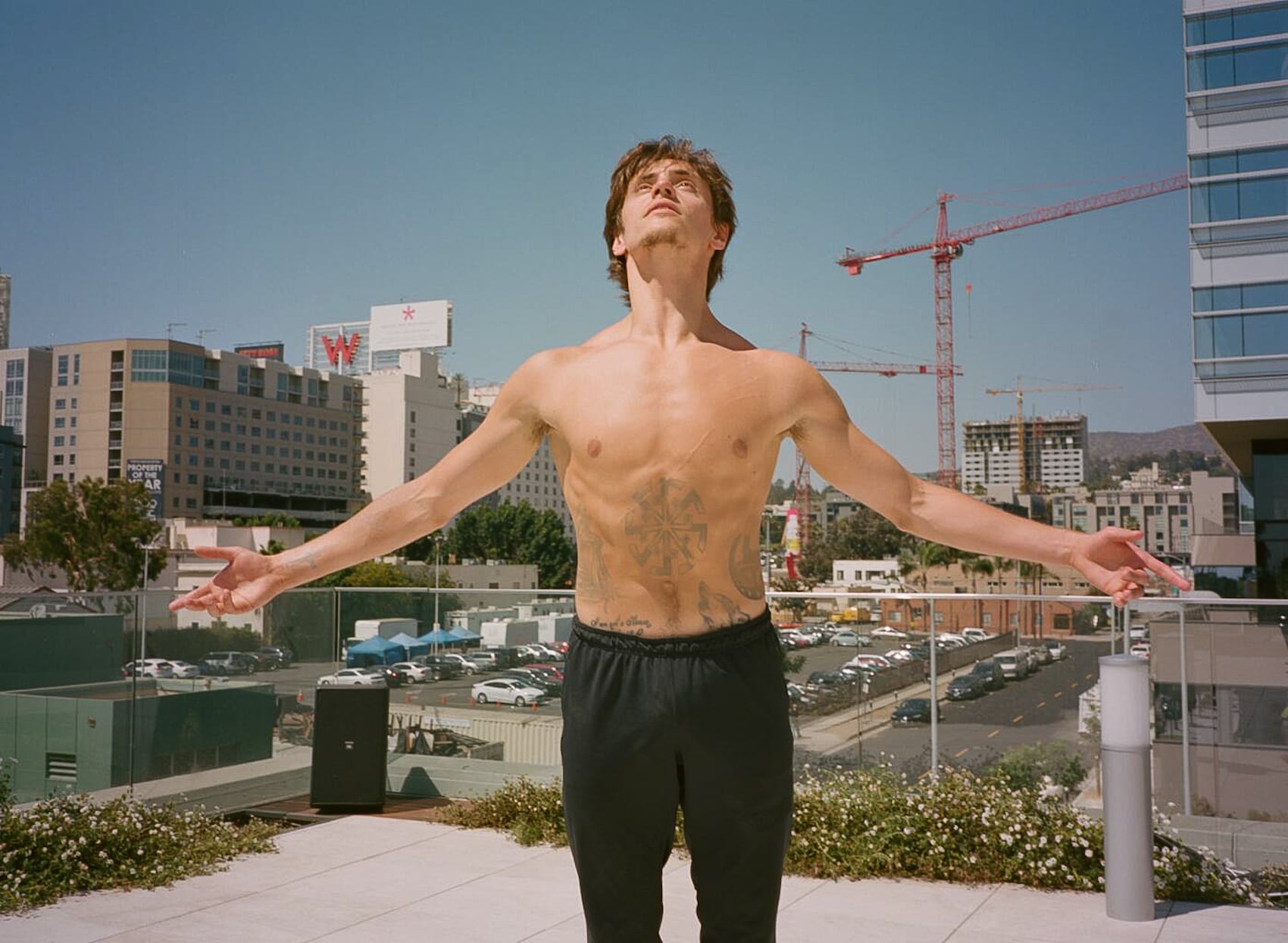
When we meet in Hollywood in early September, nearly a year after that video first exploded on YouTube, his storied reckless side seems a bit subdued. He is in town to shoot a 360 video with POPSUGAR and Samsung and later in the week will be busy promoting Dancer. Today, on the set of the video, he seems focused and at ease. His smattering of tattoos is mostly covered by body makeup, a legal precaution to protect the copyright of the tattooists who inked him. "It's good they actually think of the tattooists as artists," he remarks, turning his arm at the wrist, examining the obscured lines on his arms.
The most recent detailing of Polunin's body art I could find online had his tattoo count at 11, but he says now he has 16. I ask him to give me the story behind one new-ish addition, which I can barely make out under the fade of foundation on his inner right forearm. In hollow, serif font, the name Mickey Rourke is spelled out in letters the size of dominos. The story seems to tell itself; Rourke was Hollywood's bad boy in his early heyday, Polunin was ballet's in his. Turns out, there's more to it than that. "Mickey has a big heart," Polunin grins. "Somebody asked him to call me on my birthday because I was a big fan, and he did. He gave me this whole speech — how you should work hard — for a couple of hours. After that, I got really inspired. Before my shows, I would watch his movies. Barfly. The Wrestler. Angel Heart."
"You can get everything in life, but if there is no love, there is no reason to be."
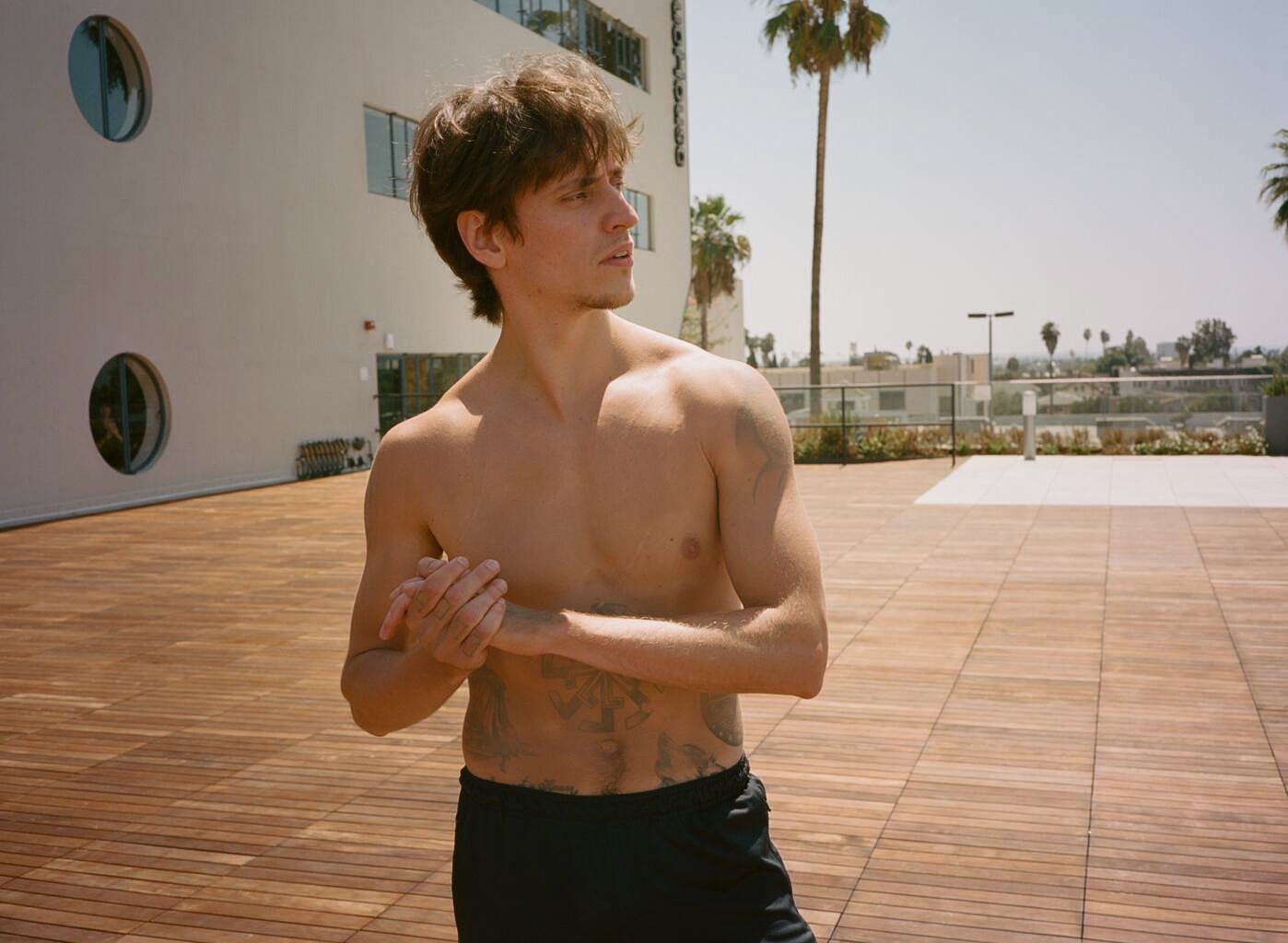
But forget Polunin's multiplying tattoos. After all, writers on deadline who might have once latched onto the easy narrative of the dancer as the rebellious wild child of ballet seem to have. Now, there's a new story thread to pursue: that of the artist in love. Polunin is in a relationship with ballerina Natalia Osipova, a virtuoso performer in her own right. The two met last year in perhaps the least edgy way possible: at the prompting of her mother. Natalia needed a partner for a production of Giselle and sent Polunin an email, at her mom's urging, to ask if he might be interested in the gig. He was. The pair quickly fell in step on the stage and in love off of it.
"You can get everything in life, but if there is no love, there is no reason to be," Polunin says. "So when I met her, it kind of grounded me. I had something to hold onto that feels right. Nothing else matters." Still, Polunin's impatient, impossible-to-tame streak hasn't exactly been sublimated by domesticity. "I'm still really scared of settling down," he admits. "I'm like, 'Oh, my god! We're getting plates! We're getting cups! What are we going to do with these?!' I'm still that person, but it's about finding the balance."
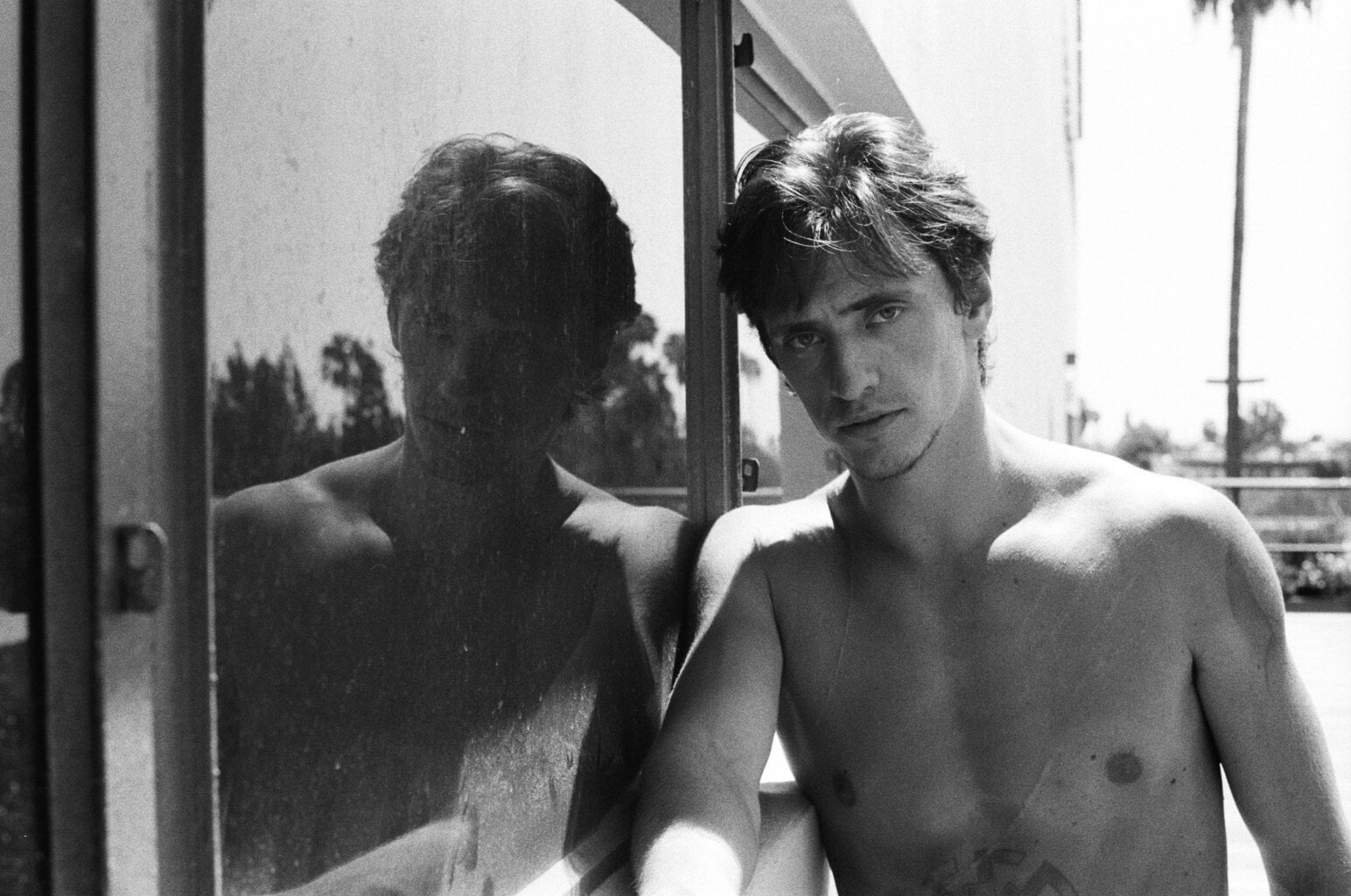
That always-on-the-verge quality in Polunin is exactly what makes his dancing exceptional. He is perhaps the best dancer of our time because of, not despite, that bristling, contrary side that threatened to derail his career just a few short years ago. It's what spills out of him on the stage, in the furious height of his grand jetés and the turmoil conveyed in the fade of his not-quite-green, not-quite-blue eyes. It's in the way each of his precise moves seems at once cast in concrete and to melt like lava into the next. But if Polunin always knew how to be a dancer, it seems that only now, at 26 (which may as well be 47 in ballet years), he's finally discovered why he wants to be one. He's finally chosen ballet himself. In his next chapter, on his own terms, he wants to be a conduit for pushing the art form into the next era — and in front of more eyeballs. It's a mission he sees as vital, and one he hopes to pursue through projects like the one he's shooting today.
"I think it's crucial," he says, leaning forward, his mussed hair falling against his forehead. "In the theater, there are only 1,000 people. And sometimes, ballet dancers and opera singers can be snobs. When Pavarotti went more pop, everybody was like, 'This is going to ruin opera.' And it actually made it much more popular. Ballet needs that."
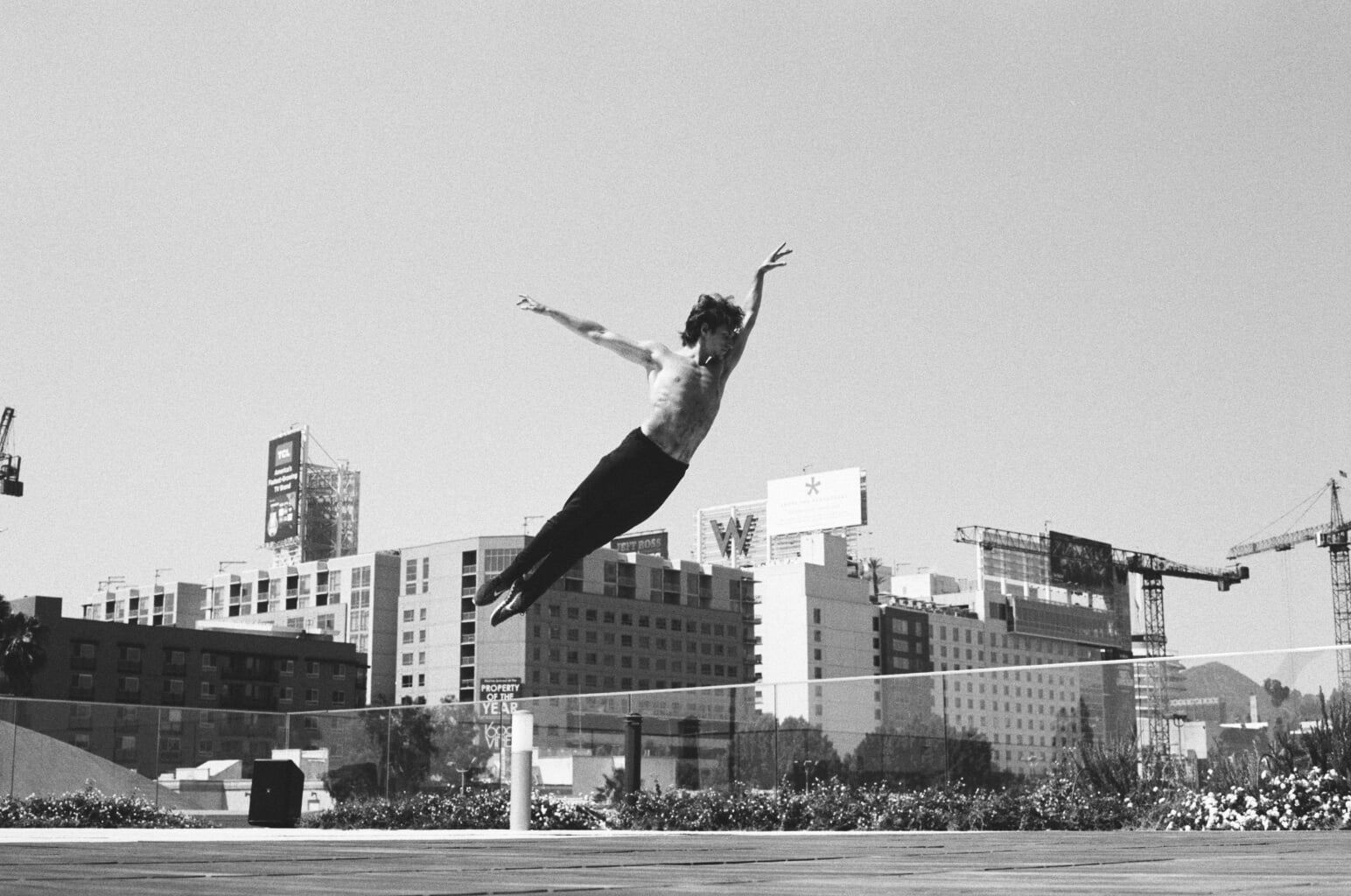
Just before we break for our interview, I watch Polunin rehearse on the rooftop of the chic, members-only club where the shoot is taking place. There is a thin mist of smog hanging in the LA sky, like a piece of gray tulle in the air, and the September sun beats down behind it. Polunin, in a pair of Nike Flyknits and black track pants, those tattoos on his arms and chest and back expertly blurred by a makeup artist, negotiates a leap. He's eyeing the 360 camera, looking for the best, most artful angle to take as he floats past its lens. It is unseasonably hot. The crew is sweltering under sunglasses, necks and noses getting pink in the sun's glare. Some of them, including me, are about to retreat indoors for a reprieve before filming begins. But as Polunin strikes an easy arabesque, just as simply as you or I might scratch an itch, one thing is clear: he certainly isn't going anywhere anytime soon.
